
This post is also available in:
 العربية
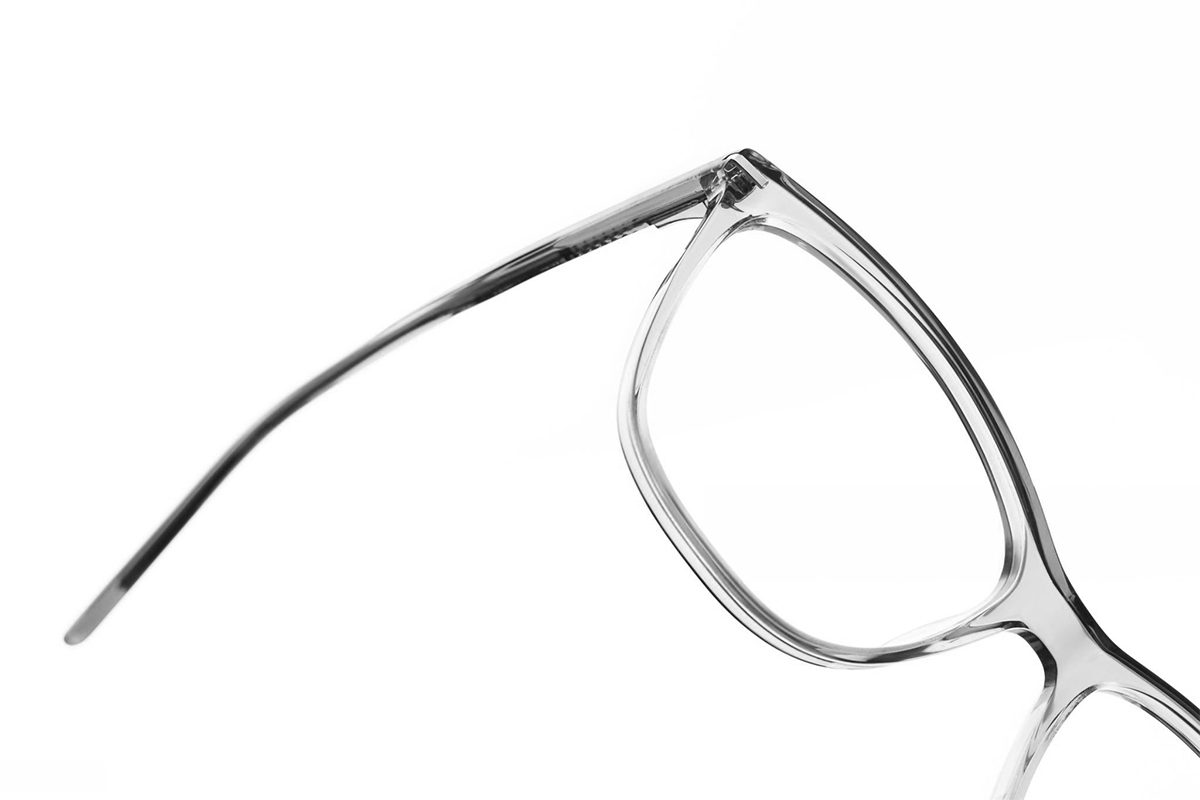
Transparent eyewear did not arrive with impact. It entered quietly, almost incidentally, as a byproduct of material exploration rather than a deliberate style movement.
Yet over time, it has become one of the most consistent presences in modern eyewear, moving from background utility to foreground design without ever losing its sense of restraint.
Its evolution is not defined by sudden breakthroughs but by a series of subtle shifts, each rooted in changes in material technology, fashion thinking and cultural behaviour.
1950s to 1970s: Material Possibility
The foundations of transparent eyewear can be traced back to the 1950s, when acetate began replacing heavier and less flexible materials in frame manufacturing.
This shift allowed for lighter constructions and opened the door to experimentation with translucency.
By the 1960s, eyewear makers were already producing frames in pale tones and semi-clear finishes. These were not positioned as fashion pieces. They were practical choices, often associated with comfort and neutrality. The idea of a completely transparent frame was still limited by manufacturing precision and finishing techniques.
Through the 1970s, experimentation continued but remained understated. Clear frames existed, though they were rarely highlighted in mainstream fashion conversations. They were worn but not celebrated.
1980s to 1990s: Precision and Refinement
The 1980s brought improvements in polishing techniques and material consistency. Manufacturers gained better control over clarity and finish, making it possible to produce frames that looked cleaner and more refined.
Still, the decade leaned heavily toward bold eyewear. Thick colours, strong shapes and statement branding dominated. Transparent frames existed in contrast to this, often chosen by those who preferred subtlety over visibility.
In the 1990s, minimalism began to influence fashion more strongly. Clean lines and restrained palettes started to replace excess. Within this context, transparent eyewear gained quiet relevance. It aligned naturally with the aesthetic of reduction, offering presence without weight.
Even then, it remained a niche choice. Appreciated but not yet widely adopted.
Early 2000s: A Shift in Taste
By the early 2000s, design across industries began moving toward simplicity. Technology products, interiors and fashion all reflected a growing preference for clarity and ease.
Transparent eyewear benefited from this shift. Frames became more refined, with softer edges and improved structural detailing. Subtle tints began to appear, adding depth while maintaining lightness.
This period also marked a change in how eyewear was perceived. It was no longer purely functional. It became part of personal identity. Transparent frames offered a way to participate in that shift without committing to something visually dominant.
2010 to 2015: Minimalism Becomes Mainstream
Between 2010 and 2015, minimalism moved from niche preference to mainstream direction. Fashion embraced neutral tones, clean silhouettes and material honesty.
Transparent eyewear entered a new phase. Designers began treating clarity as a deliberate aesthetic. Frames were crafted with greater attention to detail, with polished surfaces and carefully balanced proportions.
Subtle colour variations expanded the category. Champagne, soft grey and faint blush tones became popular, offering nuance without losing the essence of transparency.
During this time, eyewear also became more visible in digital culture. Clear frames translated well on screen, allowing facial features to remain unobstructed. This contributed to their growing appeal among a generation increasingly conscious of how they appeared in images and video.
2016 to 2019: Cultural Adoption
From 2016 onward, transparent eyewear moved firmly into the mainstream. It was no longer a secondary option. It became a defining style.
Celebrities, designers and creative professionals adopted clear frames across contexts, from everyday wear to formal appearances. The appeal lay in their adaptability. They worked across different aesthetics without competing for attention.
Manufacturing also reached a level where clarity could be achieved with high precision. Internal details such as core wires and hinges became part of the visual language rather than elements to be concealed.
Independent eyewear brands began experimenting more boldly with form. Oversized shapes, geometric structures and sculptural silhouettes emerged, all grounded in transparency.
2020 to 2023: Versatility and Permanence
The early 2020s reinforced the staying power of transparent eyewear. As lifestyles shifted and wardrobes became more fluid, versatility became essential.
Clear frames fit seamlessly into this environment. They moved easily between professional and casual settings. They adapted to changing dress codes and personal styles.
At the same time, consumer awareness increased. Buyers began to look more closely at material quality and craftsmanship. Transparent frames, by their very nature, revealed their construction. This pushed brands to elevate finishing standards and focus on precision.
Sustainability also entered the conversation more strongly. The development of bio-based acetates introduced new possibilities for producing transparent frames with reduced environmental impact.
2024 to Present: Clarity as Identity
In recent years, transparent eyewear has settled into a position of quiet authority. It is no longer described as a trend. It is understood as a category.
Design continues to evolve through proportion and detail rather than dramatic change. Frames are thicker or thinner, sharper or softer, but the core idea remains intact.
Colour has expanded while staying restrained. Light tints and barely visible hues offer variation without disrupting clarity. The emphasis remains on balance.
Technology is also beginning to shape the category. As eyewear moves toward integrating digital features, transparent frames provide a natural foundation. They can accommodate complexity while maintaining a clean appearance.
More importantly, transparent eyewear reflects a broader shift in how style is approached. It suggests confidence without excess and presence without noise.
Looking ahead, transparent eyewear is unlikely to fade. Its relevance is tied not to a moment but to a mindset.
As materials continue to improve and design becomes more precise, the category will refine itself further. Sustainability and technology will shape its next phase, but its essence will remain unchanged.
It will continue to sit lightly on the face, quietly present, never overpowering.
And in that restraint lies its strength.
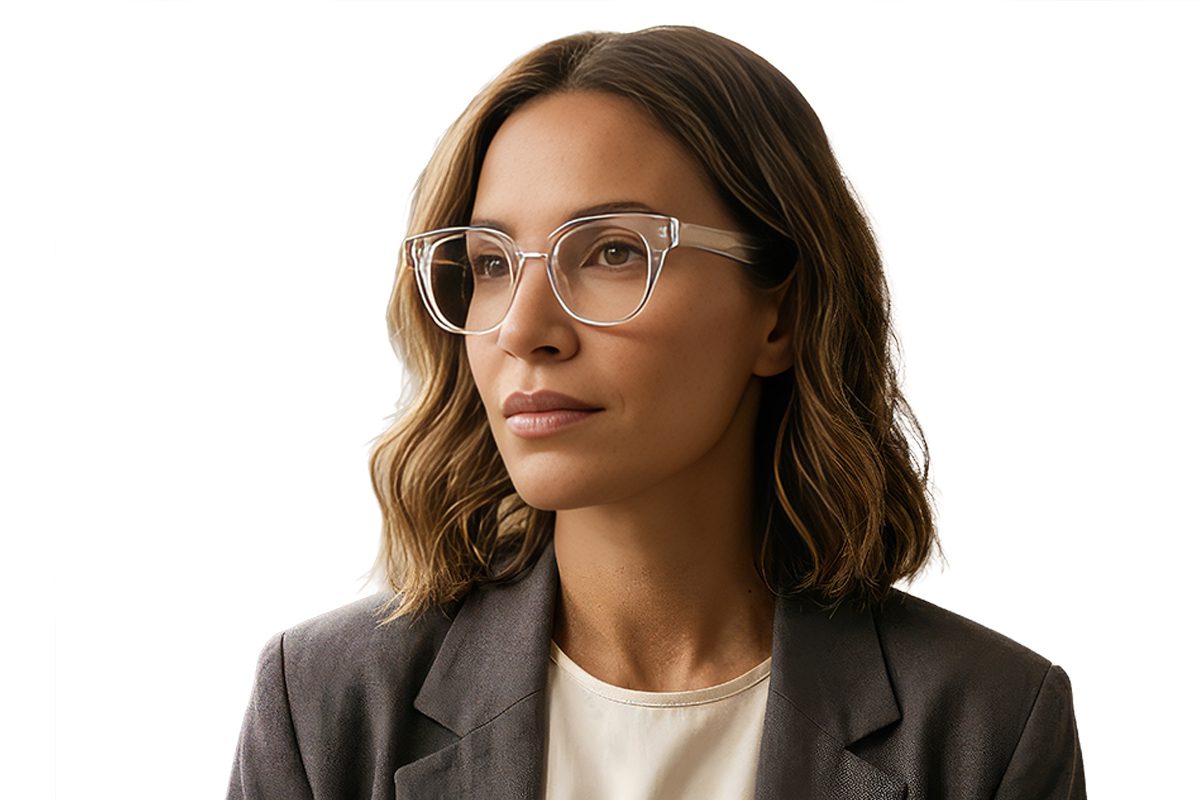 Seen, Not Said: Why Transparency Never Fades
Transparent eyewear has lasted because it does not rely on novelty.
It is rooted in adaptability. It allows the wearer to remain visible.
It works across different environments. It evolves without losing its identity.
In a landscape where trends often move quickly and disappear just as fast, clarity offers something different. It offers continuity.