
ZEISS: The New Vision Equation
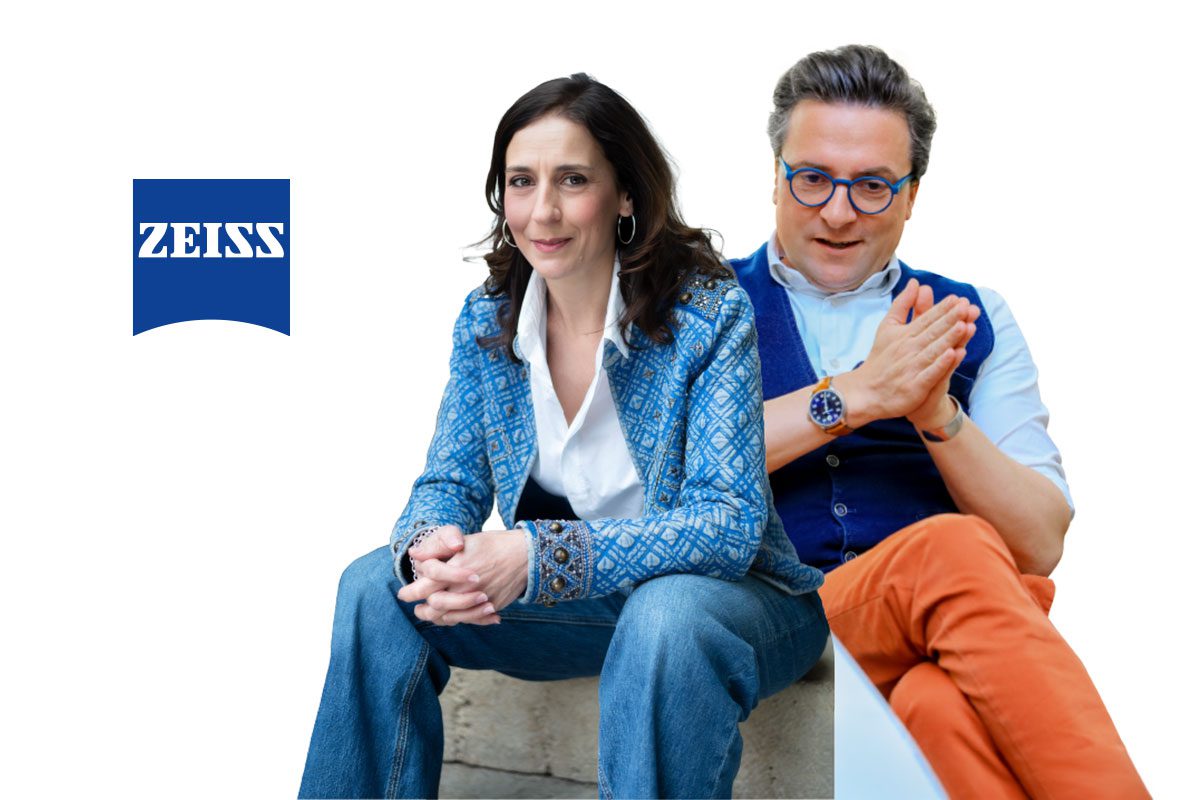
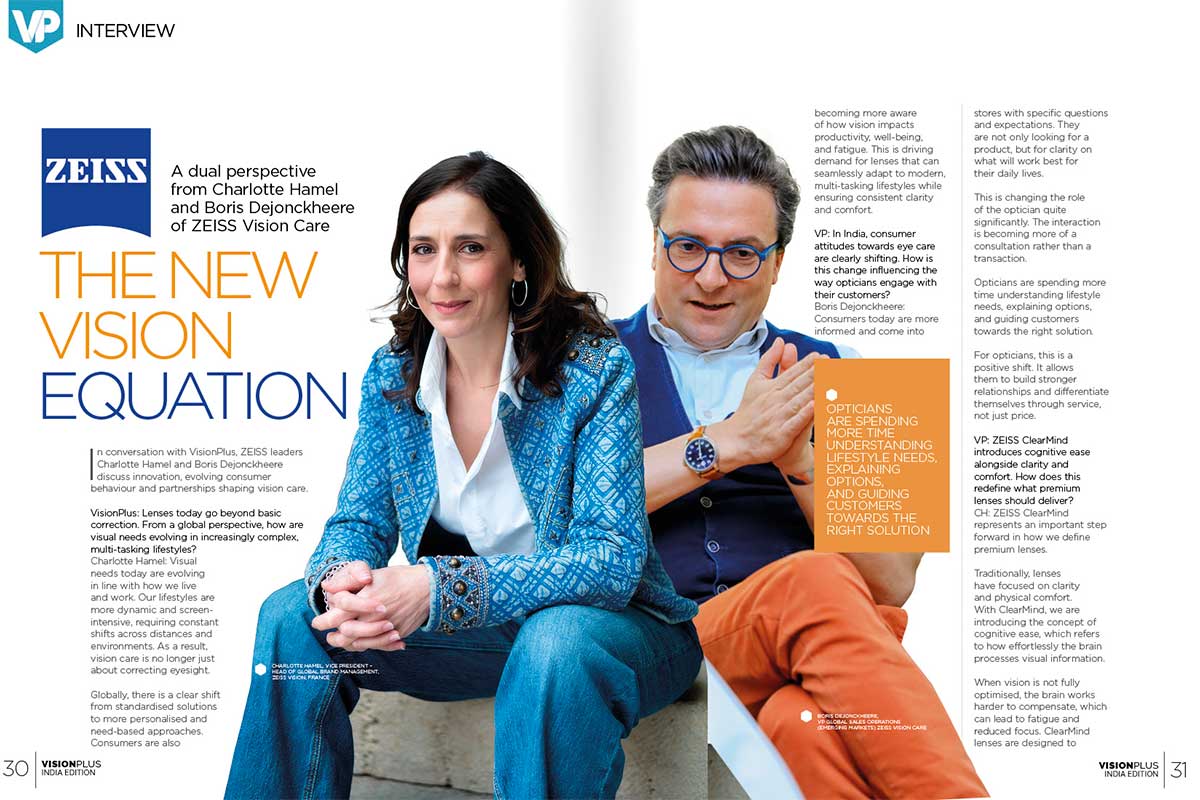
A dual perspective from Charlotte Hamel and Boris Dejonckheere of ZEISS Vision Care
In conversation with VisionPlus, ZEISS leaders Charlotte Hamel and Boris Dejonckheere discuss innovation, evolving consumer behaviour and partnerships shaping vision care.
VisionPlus: Lenses today go beyond basic correction. From a global perspective, how are visual needs evolving in increasingly complex, multi-tasking lifestyles?
Charlotte Hamel: Visual needs today are evolving in line with how we live and work. Our lifestyles are more dynamic and screen-intensive, requiring constant shifts across distances and environments. As a result, vision care is no longer just about correcting eyesight.
Globally, there is a clear shift from standardised solutions to more personalised and need-based approaches. Consumers are also becoming more aware of how vision impacts productivity, well-being, and fatigue. This is driving demand for lenses that can seamlessly adapt to modern, multi-tasking lifestyles while ensuring consistent clarity and comfort.
VP: In India, consumer attitudes towards eye care are clearly shifting. How is this change influencing the way opticians engage with their customers?
Boris Dejonckheere: Consumers today are more informed and come into stores with specific questions and expectations. They are not only looking for a product, but for clarity on what will work best for
their daily lives.
This is changing the role of the optician quite significantly. The interaction is becoming more of a consultation rather than a transaction.
Opticians are spending more time understanding lifestyle needs, explaining options, and guiding customers towards the right solution.
For opticians, this is a positive shift. It allows them to build stronger relationships and differentiate themselves through service, not just price.
VP: ZEISS ClearMind introduces cognitive ease alongside clarity and comfort. How does this redefine what premium lenses should deliver?
CH: ZEISS ClearMind represents an important step forward in how we define premium lenses.
Traditionally, lenses have focused on clarity and physical comfort. With ClearMind, we are introducing the concept of cognitive ease, which refers to how effortlessly the brain processes visual information.
When vision is not fully optimised, the brain works harder to compensate, which can lead to fatigue and reduced focus. ClearMind lenses are designed to minimise this effort, enabling a more natural and relaxed visual experience. In that sense, premium lenses are no longer only about sharper vision. They are about enhancing overall visual well-being and helping people feel less strained and more focused throughout their day.
VP: As opticians take on a more consultative role, how critical are partnerships in enabling more personalised, value-driven solutions?
BD: Partnerships are absolutely critical in this transition. When the role of the optician evolves, the level of support they require also increases.
It is not just about supplying products, but about enabling them with the right knowledge, tools, and confidence to guide customers effectively.

At ZEISS, we focus on working closely with our partners to understand their day-to-day challenges and support them with practical solutions. This includes training, product understanding, and
ongoing engagement.
When opticians feel supported, they are better equipped to have meaningful conversations with customers. This ultimately leads to more personalised solutions and stronger long-term relationships.
VP: ZEISS NeurOptix and Intelligence Augmented Design are key to ClearMind lenses. How do these innovations enhance the everyday visual experience?
CH: ZEISS NeurOptix and Intelligence Augmented Design are central to how ClearMind lenses deliver this new level of visual experience. NeurOptix is based on our understanding of the connection between the eye and the brain, and how visual signals are processed. By optimising this interaction, the lenses help reduce unnecessary
cognitive effort.
At the same time, Intelligence Augmented Design uses advanced data and modelling to create lenses that are highly refined and aligned with real-world visual behaviour. This allows for better focus, smoother transitions, and improved contrast across different viewing conditions. Together, these innovations ensure that vision feels more intuitive and effortless.
VP: How are solutions like ZEISS VISUCORE 500 and ZEISS VISUFIT 1000 helping improve accuracy and build consumer trust?
BD: Technology plays a key role in bringing consistency and precision into the customer journey. With ZEISS VISUCORE 500, the focus is on ensuring accurate and efficient eye testing. When the measurement is right, it creates a strong foundation for delivering the correct visual solution.
ZEISS VISUFIT 1000 complements this by improving the consultation experience. It allows customers to better understand how frames fit and how lenses are positioned, making the process more visual
and interactive.
Together, these tools help simplify complex decisions. When customers can see and understand what is being recommended, it builds confidence in both the product and the optician.
VP: With rising awareness around visual fatigue, particularly among those aged 35+, how does ZEISS ClearMind address these concerns across lens categories?
CH: Visual fatigue has become a growing concern, especially for individuals above 35 facing increased screen-related strain. At ZEISS, we recognise that this is not limited to one specific group or use case, which is why ClearMind is designed to address these challenges across different lens categories.
By improving clarity, enhancing contrast, and reducing disruptive visual elements, ClearMind lenses help minimise the effort required to maintain focus. This directly contributes to reduced eye strain
and a more comfortable visual experience over extended periods.
Importantly, the benefit extends beyond just the eyes. It supports overall mental comfort by reducing the feeling of visual overload, making a meaningful difference in
both professional and
everyday settings.

VP: As India’s optical market expands beyond metros, how do formats like ZEISS Vision Centre help deliver a more consistent and elevated customer experience?
BD: As the market expands, maintaining consistency becomes very important. Customers, regardless of location, expect a certain level of service and clarity in their experience.
The ZEISS Vision Centre concept helps bring structure to this journey. It ensures that from eye testing to consultation and final delivery, there is a clear and reliable process in place. This creates a more organised and transparent experience for the customer.
At the same time, it supports opticians by providing access to technology, training, and global best practices.
This combination helps maintain quality standards while still allowing the optician to bring their personal approach to customer interaction.
VP: what message would you like to share with our readers?
CH: Vision care is entering a new phase, where the focus is not only on correcting sight but on supporting overall visual wellbeing. My message to readers would be to view vision care as an essential part of their overall health. Regular eye check-ups and the right choice of lenses can have a significant impact on comfort, productivity, and quality
of life.
It is also important to seek guidance from eye care professionals, who play a key role in helping individuals make informed decisions. With the right solutions, vision can become more effortless, enabling people
to perform at their best
every day.
VP: VisionPlus Magazine celebrates 25 years this year. What role has it played in shaping conversations within the Indian optical industry?
BD: Publications like VisionPlus Magazine play an important role in bringing
the industry together. Over the years, they have helped create awareness, share knowledge and highlight key trends that influence how the
market evolves.
They also provide a platform for dialogue between different stakeholders, including opticians, manufacturers and industry experts. This exchange of perspectives is important for the growth of the industry.
Reaching a milestone like 25 years reflects the consistency and relevance of such a platform. It shows their continued contribution to educating and supporting the optical community
in India.