
Most revolutions in healthcare don’t begin with dramatic breakthroughs. They start with something far more ordinary: frustration, long waiting lists, and the quiet sense that things could work better.
The story of SiVIEW is one such revolution.
Nearly a decade ago, in Paris, waiting several months for a basic eye exam had become routine. For Laure Pichereau — optometrist, academic and clinician — this was anything but normal. Access to vision care was becoming a bottleneck, not because technology was lacking, but because time and professional expertise were stretched thin.
Rather than accepting this as inevitable, Laure asked a different question: what if technology could handle execution, allowing professionals to focus on what truly requires expertise?
That question became the foundation of SiVIEW.
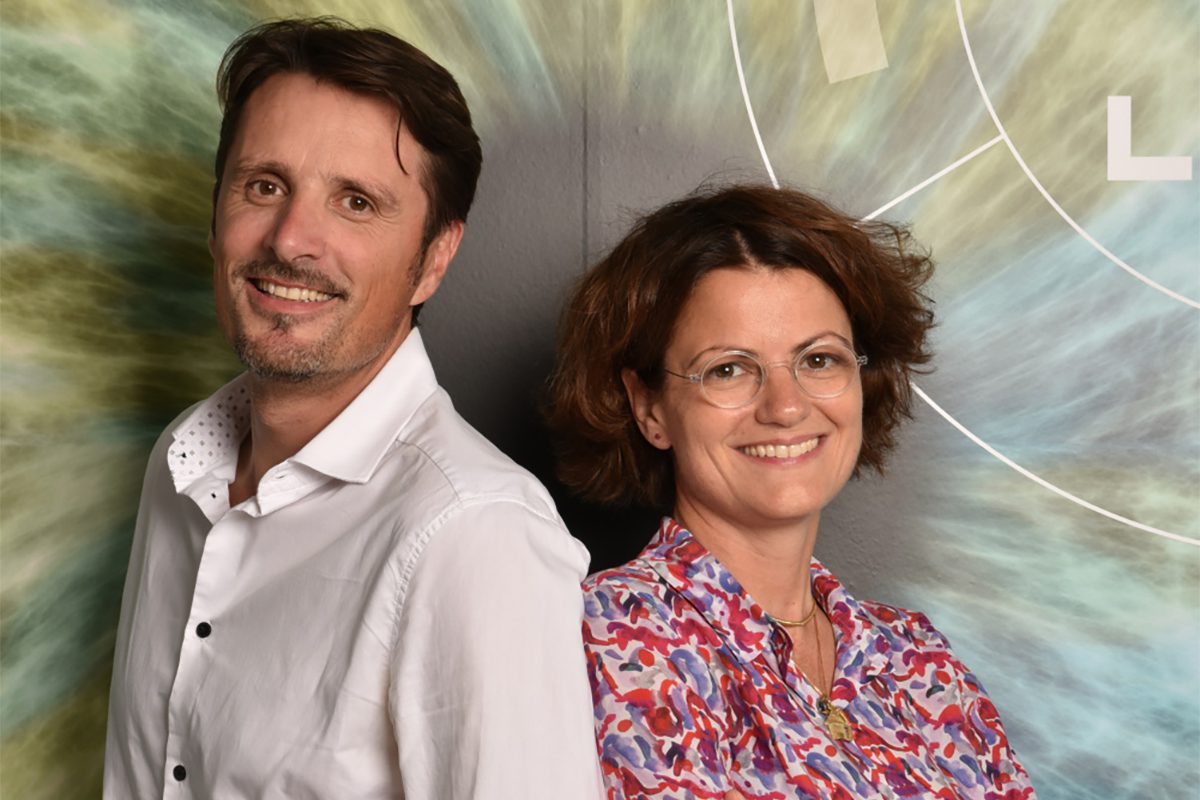
A meeting of clinical conviction and operational reality.
Founded in 2016 by Laure Pichereau and Jérôme Perderiset, SiVIEW was born from the convergence of two complementary perspectives on eye care. Laure brings deep expertise from the ophthalmic and optical industries, shaped by years of clinical practice and her role as a key reference in university optometry education. Jérôme contributes extensive experience in optical retail networks alongside hands-on clinical practice, offering a pragmatic understanding of workflow organisation, operational efficiency and scalable care delivery.
Together, they share more than two decades of experience in the optical sector — and a common conviction: innovation in eye care should elevate professionals, not replace them.
From the outset, SiVIEW was designed as an intelligent system capable of automating execution while preserving clinical judgment. The goal was never to remove the human element from eye care, but to give it greater space.
Technology with a human agenda.
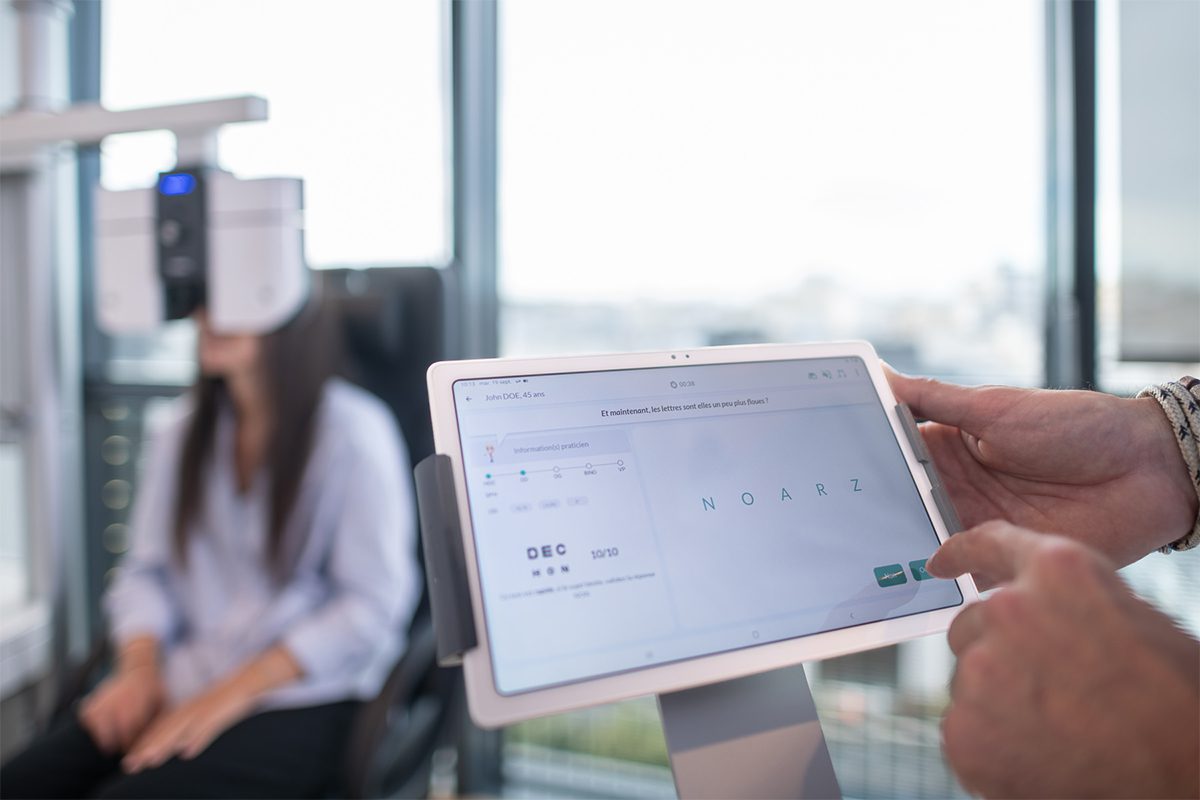
SiVIEW combines advanced artificial intelligence with intuitive interfaces accessible to non-experts, delivering exam quality that is precise, personalised, and clinically robust. By structuring and standardising execution, the system frees practitioners to focus on complex cases, validation, decision-making and meaningful patient interaction.
Over the past decade, this philosophy has supported steady international growth. Today, SiVIEW solutions operate in 19 countries, with more than 1,000 systems installed, a team of over 50 people, and upwards of 800,000 eye exams conducted using its technology.
Beyond the numbers, SiVIEW is recognised for a distinctive approach: thoughtful, pragmatic and quietly ambitious.
Flexible Refraction Management: one concept, infinite configurations.
As global demand for eye care rises and professional shortages intensify, SiVIEW’s vision has evolved into a clear operational framework: Flexible Refraction Management.
Rather than imposing a single workflow, Flexible Refraction adapts to the real needs of each organisation. It acknowledges that practices vary in size, geography, staffing and patient flow — and that refraction models must evolve accordingly.
This flexibility rests on five pillars:
- Care and administration: patient history, EMR connectivity, scheduling and advanced data analysis
- Staff organisation: flexible allocation of execution, supervision, validation and expert review
- Interfaces: voice control and remote operation
- Geography: in-store or remote supervision through tele-optometry
- Hardware compatibility: seamless integration with a wide range of devices
The result is a scalable refraction model that standardises processes without sacrificing adaptability — and evolves alongside practice needs.
Looking ahead, with intention
For SiVIEW, innovation is not about spectacle. It is about building systems that are clinically sound, operationally realistic and deeply respectful of the profession — systems that help eye care professionals work better, not simply faster.
As a French company, SiVIEW brings a distinct sensibility to this mission: precision, clarity and a refusal to separate technology from humanity.
In SiVIEW’s vision, the future of eye care belongs to solutions intelligent enough to adapt — and human enough to care.