

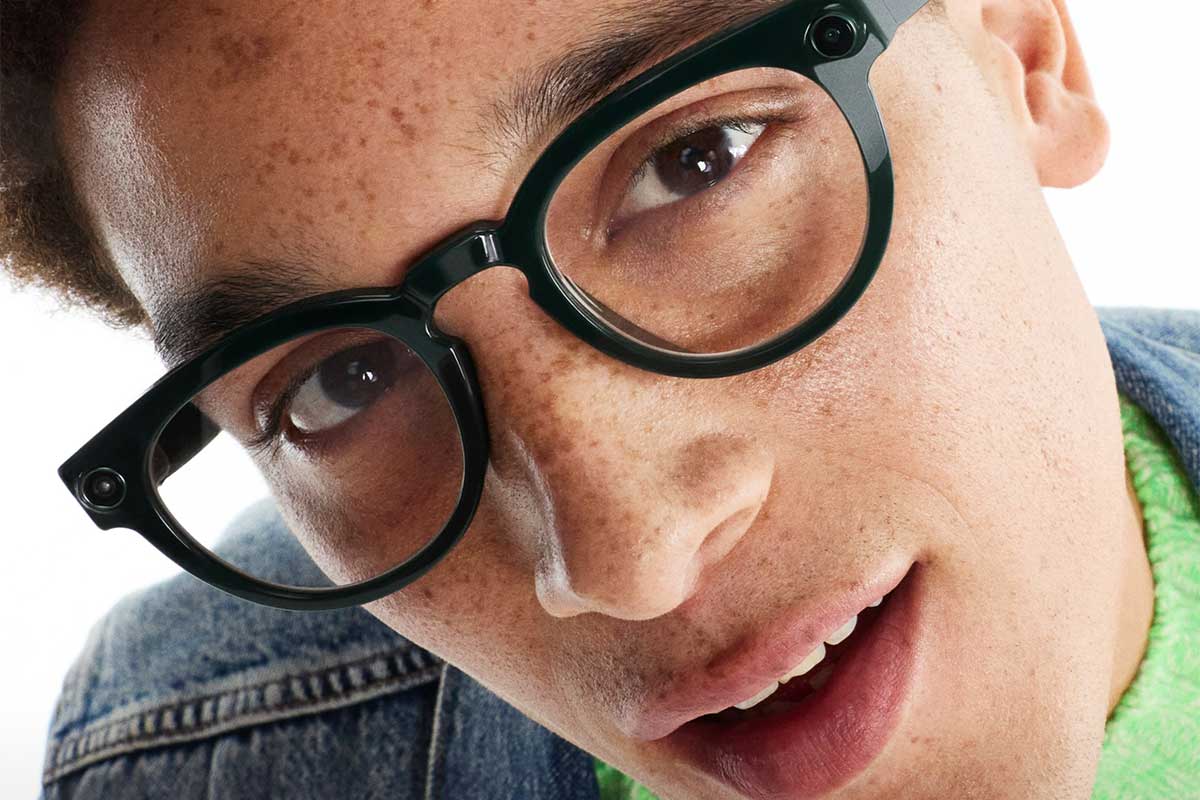

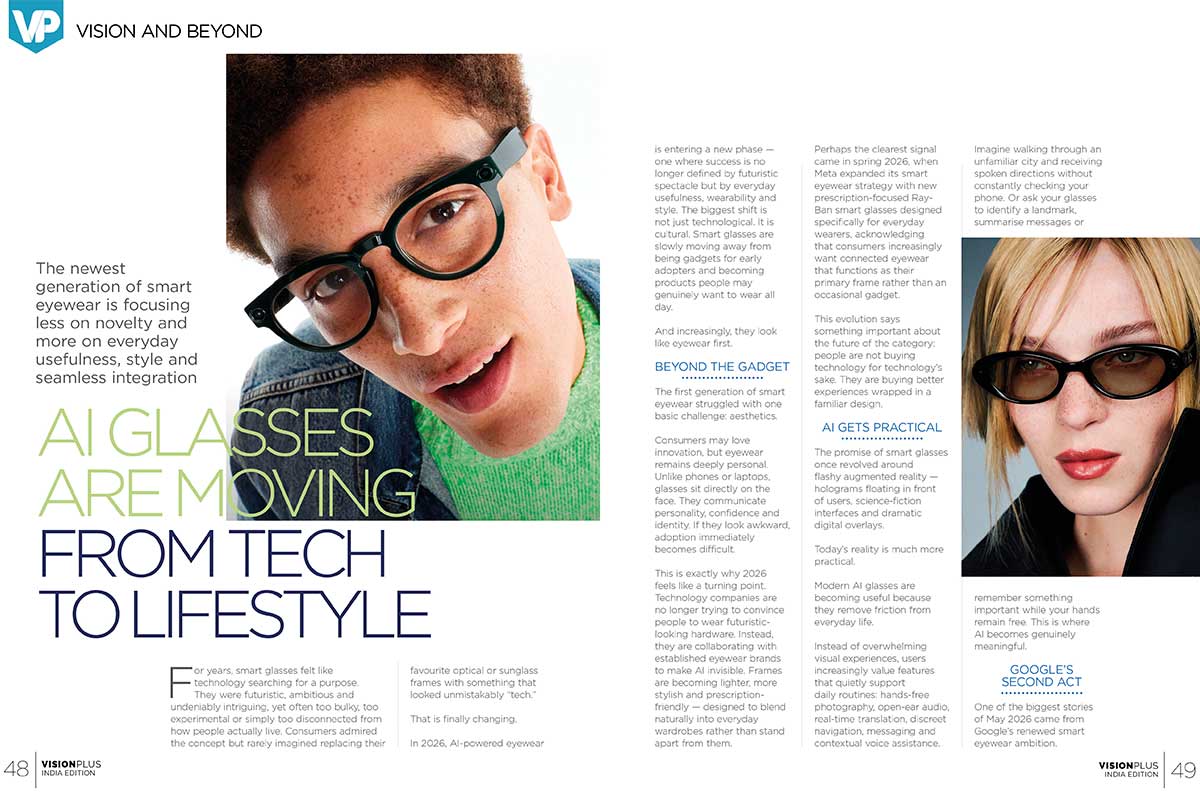
AI Glasses Are Moving From Tech To Lifestyle
The newest generation of smart eyewear is focusing less on novelty and more on everyday usefulness, style and seamless integration
For years, smart glasses felt like technology searching for a purpose. They were futuristic, ambitious and undeniably intriguing, yet often too bulky, too experimental or simply too disconnected from how people actually live. Consumers admired the concept but rarely imagined replacing their favourite optical or sunglass frames with something that looked unmistakably “tech.”
That is finally changing.
In 2026, AI-powered eyewear is entering a new phase — one where success is no longer defined by futuristic spectacle but by everyday usefulness, wearability and style. The biggest shift is not just technological. It is cultural. Smart glasses are slowly moving away from being gadgets for early adopters and becoming products people may genuinely want to wear all day.
And increasingly, they look like eyewear first.
Beyond The Gadget
The first generation of smart eyewear struggled with one basic challenge: aesthetics.
Consumers may love innovation, but eyewear remains deeply personal. Unlike phones or laptops, glasses sit directly on the face. They communicate personality, confidence and identity. If they look awkward, adoption immediately becomes difficult.
This is exactly why 2026 feels like a turning point. Technology companies are no longer trying to convince people to wear futuristic-looking hardware. Instead, they are collaborating with established eyewear brands to make AI invisible. Frames are becoming lighter, more stylish and prescription-friendly — designed to blend naturally into everyday wardrobes rather than stand apart from them.
Perhaps the clearest signal came in spring 2026, when Meta expanded its smart eyewear strategy with new prescription-focused Ray-Ban smart glasses designed specifically for everyday wearers, acknowledging that consumers increasingly want connected eyewear that functions as their primary frame rather than an occasional gadget.
This evolution says something important about the future of the category: people are not buying technology for technology’s sake. They are buying better experiences wrapped in a familiar design.

AI Gets Practical
The promise of smart glasses once revolved around flashy augmented reality — holograms floating in front of users, science-fiction interfaces and dramatic digital overlays.
Today’s reality is much more practical.
Modern AI glasses are becoming useful because they remove friction from everyday life.
Instead of overwhelming visual experiences, users increasingly value features that quietly support daily routines: hands-free photography, open-ear audio, real-time translation, discreet navigation, messaging and contextual voice assistance.
Imagine walking through an unfamiliar city and receiving spoken directions without constantly checking your phone. Or ask your glasses to identify a landmark, summarise messages or remember something important while your hands remain free. This is where AI becomes genuinely meaningful.
Google’s Second Act
One of the biggest stories of May 2026 came from Google’s renewed smart eyewear ambition.
At Google I/O 2026, the company officially showcased its Android XR-powered intelligent eyewear, developed with partners including Samsung, Warby Parker and Gentle Monster.
More significantly, Google positioned Gemini AI as the centre of the experience, allowing wearers to ask questions, receive directions, send messages and interact with information naturally — without constantly reaching for a smartphone. Google says consumer-ready intelligent eyewear will begin arriving later this year.
What feels different this time is intent.
Unlike the infamous early Google Glass era, today’s strategy focuses on glasses people would genuinely want to wear. Fashion partnerships are central to the plan, proving the industry now understands that success depends as much on optics and styling as artificial intelligence.
The message is clear: AI glasses are no longer being built to impress. They are being built to integrate.
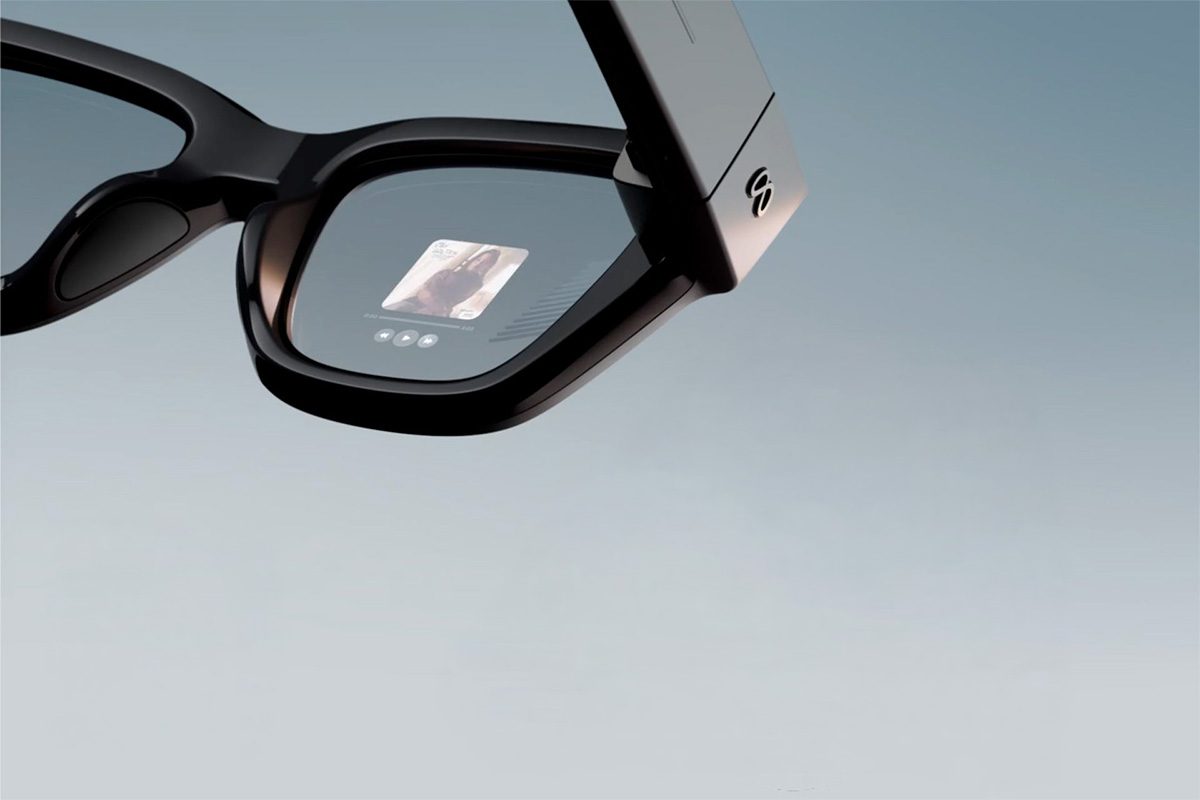
Meta’s Quiet Evolution
While Google is re-entering the conversation, Meta has arguably spent the last few years shaping what mainstream smart eyewear adoption actually looks like.
Its Ray-Ban smart glasses helped normalise the idea that eyewear could include cameras, microphones and AI without looking unusual. But in 2026, the functionality is becoming increasingly sophisticated.
Recent updates include real-time translation, contextual assistance, smarter memory features and hands-free messaging through gesture-based controls. Meta is also pushing wearable AI toward more natural interactions, allowing users to communicate through subtle gestures and conversational prompts rather than relying entirely on touchscreens.
This signals a larger behavioural shift: wearable technology is moving toward being proactive rather than reactive.
Instead of opening apps, people simply ask. Perhaps the most fascinating thing about AI glasses is that their future suddenly feels less futuristic.
The category appears to be moving away from exaggerated promises and toward subtle usefulness. Lighter frames, better aesthetics, prescription compatibility and conversational AI are replacing the science-fiction fantasy of digital overload.
And that may be exactly why smart eyewear is finally becoming relevant.
AI glasses are succeeding not because they are becoming more extraordinary, but because they are becoming ordinary enough to fit seamlessly into real life.
Optical’s Next Chapter
For optical retailers and eyewear professionals, this transition deserves close observation.
AI eyewear is no longer a niche discussion limited to Silicon Valley. Prescription compatibility is improving rapidly, frame designs are becoming more commercially viable and consumer awareness continues to grow.
The opportunity is not necessarily immediate mass adoption, but gradual integration.
Just as blue-light lenses, premium coatings and performance eyewear evolved from niche offerings into mainstream categories, AI-enabled frames may slowly become part of the wider optical ecosystem.
Consumers may eventually begin asking not only about fit, material or lens type — but also about connected features and AI capability.
The line between vision correction, communication and wearable computing is becoming increasingly blurred.